Room 1 of 3
Posts from the working surface — a piece in progress, a failure mid-fold, a method explained while the hands are still moving.
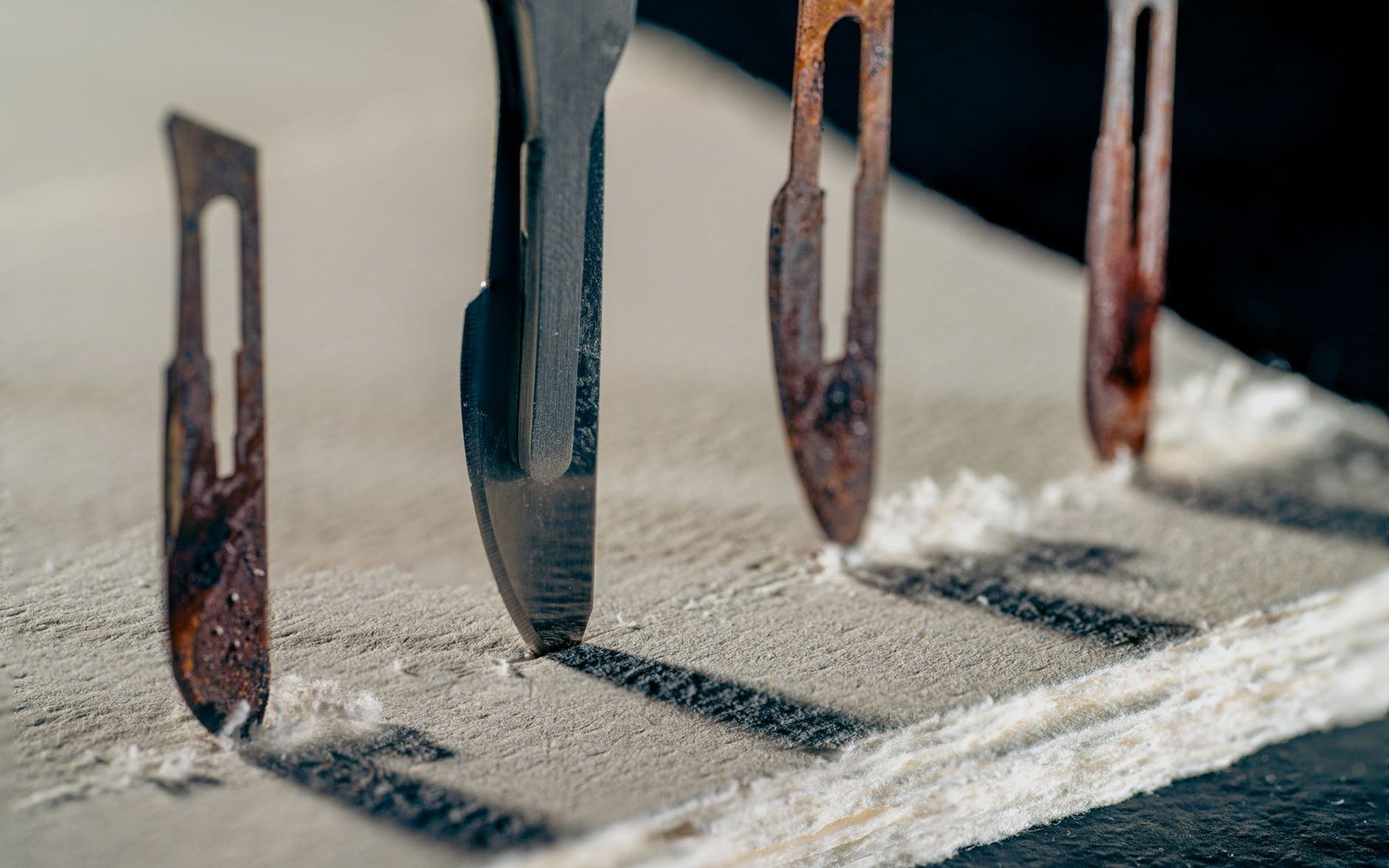
A walk-through of cutting strips narrower than two millimetres by hand — what holds the paper steady, where the blade wants to wander and how to get it back.
An argument that fringe — the ragged edge left when a cut is almost but not quite clean — is not a texture choice but a sign something went wrong earlier.
Explains what a bridge is in cut-paper work — the uncut span of paper that keeps a form from collapsing — and why getting bridge placement wrong is the thing that kills a piece at the last stage rather than the first.
A first-person account of a specific piece that failed twice on bridge placement and worked on the third attempt — what was different and why the fix was obvious in retrospect.
Follows three successive tries at cutting the same curve freehand — what changed each time, what the paper revealed about the blade angle, and at what point the hand stops correcting and starts trusting.
A short observation piece about paper moving — expanding, curling, taking on humidity — after you've left work you thought was finished.
Compares two approaches to creating a fold: scoring first with a bone folder or tool, versus folding directly over a straight edge.
An argument for working at small scale — not as a limitation but as a demand.