The Edit You Can See
Painting builds up from nothing. Cutting removes. Collage does something stranger: it selects from what already exists, and that act of selection is the whole argument. The piece you put down carries the ghost of the pile you didn't use. That tension doesn't disappear when the glue dries.
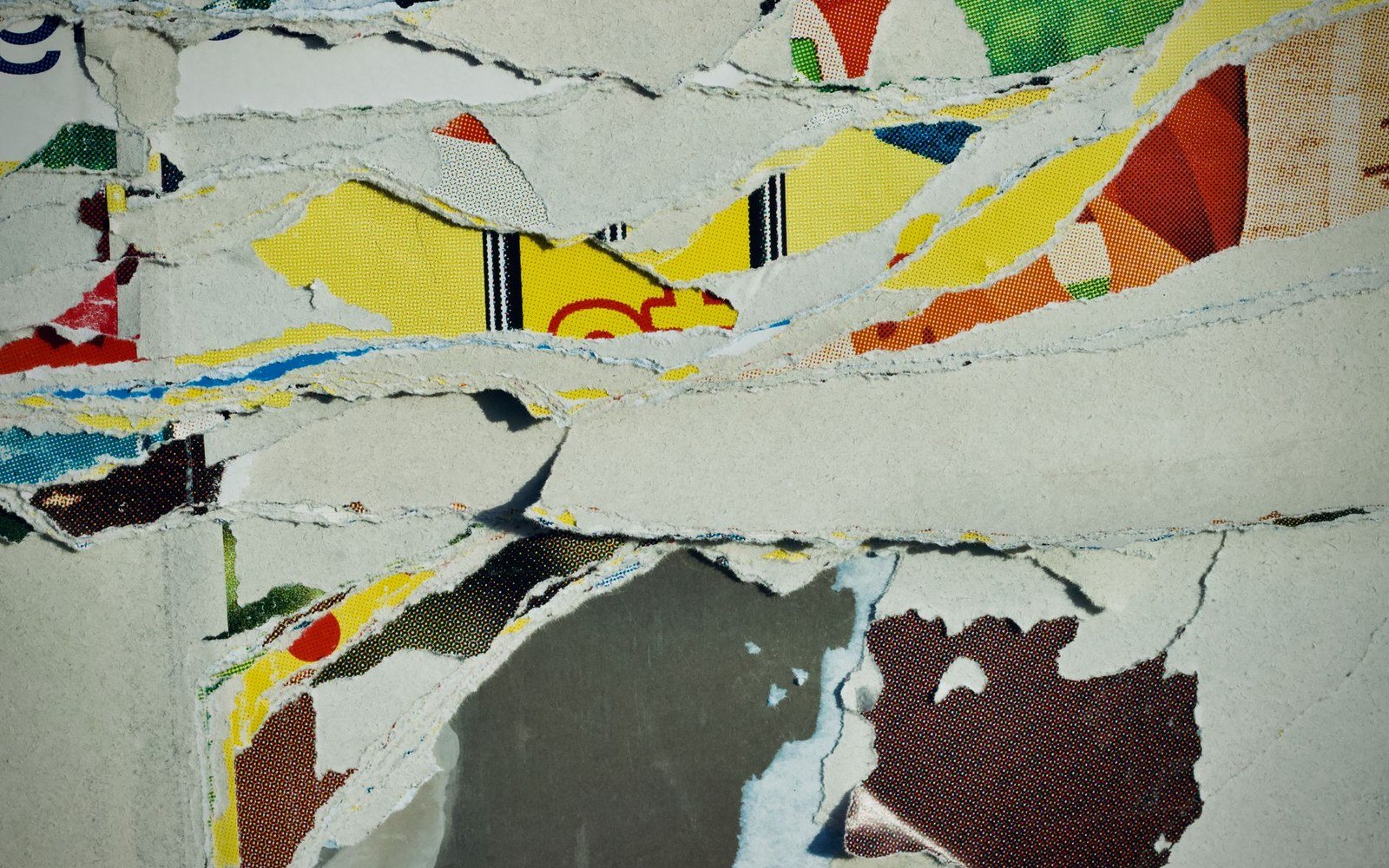
This is why collage feels different in the hand. Not easier — different. You are not inventing marks; you are making claims. This scrap of newspaper, this torn edge, this particular weight of tissue over that ground: each one is a small assertion about what belongs next to what. Refuse one piece and you've argued against it. Place another and you've argued for it. The work accumulates positions.
Painters can repaint. Cutters can turn a failed line into a different one. The collagist is stuck with the material's existing identity — its colour, its printed text, its surface history — and must either use that identity or work against it. There's no neutral choice. Every placement commits.
What I notice, making it, is how quickly the decisions stack up. Five pieces in, I'm already defending earlier choices against new ones. The work starts to talk back. Something that looked right alone looks wrong next to the thing placed after it, and now I have to either move it or justify leaving it. This is not assembly. It is argument, conducted with scissors and a bone folder, and like most arguments it rarely ends where you expected.
The failure mode is not a bad cut or an uneven edge. It is an unexamined choice — something placed because it fit the space, not because it deserved to be there.
The piece you put down carries the ghost of the pile you didn't use.
It is an unexamined choice — something placed because it fit the space, not because it deserved to be there. ---