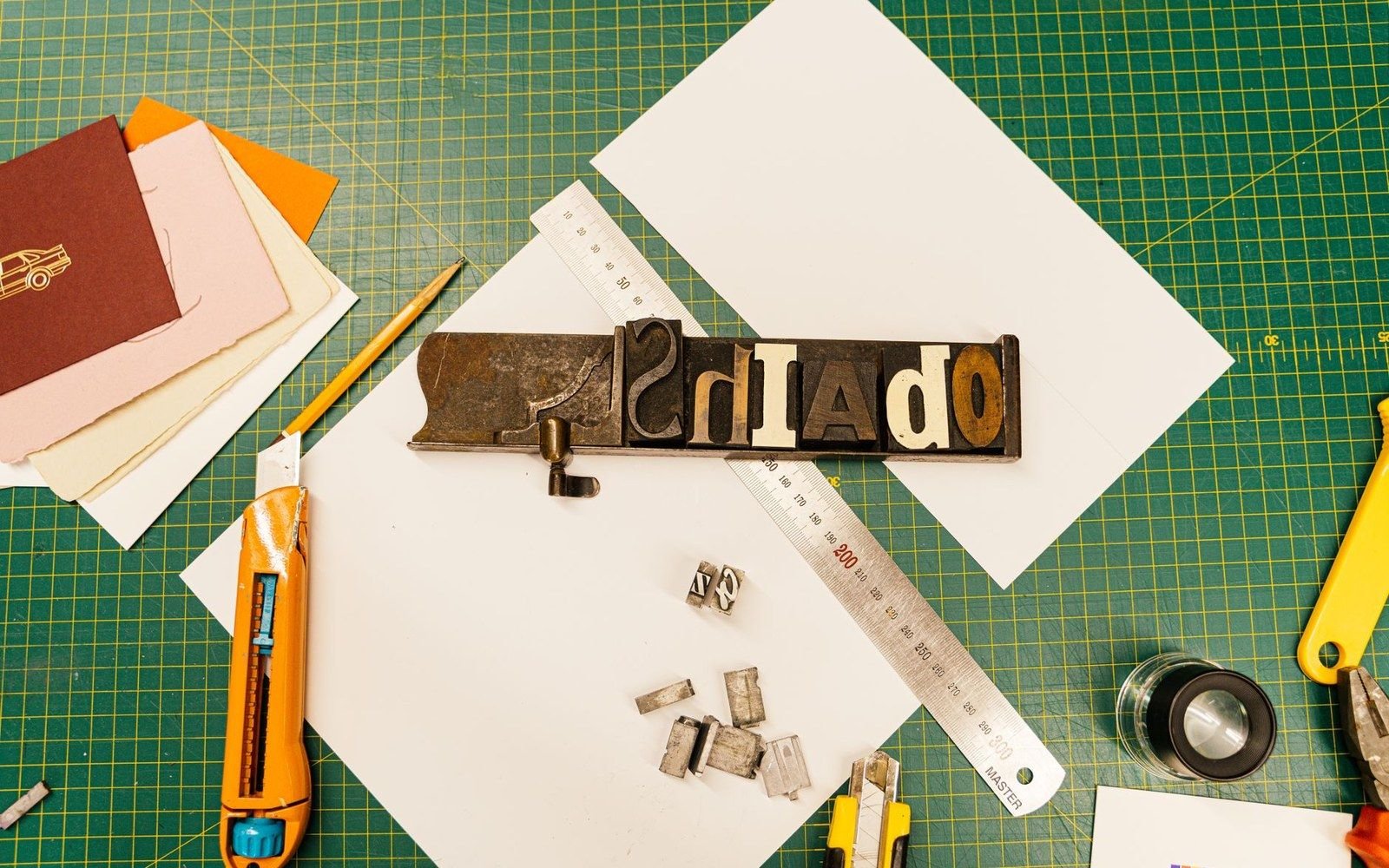
The first time I ran a previously collaged sheet through a press, I expected mild weirdness. What I got was a lesson in how completely I'd misunderstood what I was printing on.
Printmaking assumes a lot. It assumes a flat, consistent, absorbent surface — a sheet that will take ink predictably across every centimetre, that won't fight the roller or reject the plate. When you introduce a sheet that has already been worked — painted in patches, printed once, layered with fragments of tissue or magazine — you've replaced that assumption with a variable. The ink doesn't know the difference between the freshly papered ground and the waxy skin of an old print fragment; it treats them as if they should behave identically. They don't.
The technical word for what you're actually printing on is the substrate, and if you've ever read anything about substrate preparation you'll know it's treated as the boring part — something you sort out before the interesting work begins. I've come to think of it as the most interesting part. The substrate isn't passive. It's already made decisions.
What changes when the surface has a history
Ink adhesion is largely about surface energy — a simplified way of saying how willing a surface is to let liquid spread across it and bond. Uncoated paper has reasonable surface energy; it's slightly porous, slightly textural, slightly absorbent. When you print onto a sheet that already carries a layer of ink, the dynamics shift. Dried oil-based inks, in particular, leave a surface that's harder and less absorbent than the paper beneath. Water-based inks on top can bead slightly at the edges of those existing printed areas, the boundary between old and new ink becoming visible as a difference in sheen or saturation, even when you didn't mean for it to be.
This is not always a problem. Sometimes it's exactly the thing.
There's a point in layering where you stop trying to make the new layer look seamless and start using the resistance. A previously printed patch of solid colour, run through again with a transparent or lightly inked plate, will hold that second layer differently from the white paper beside it. The white paper is more absorbent; it pulls ink in and produces a slightly duller, denser result. The pre-printed area sits the new ink on top of a less porous surface and the result is optically different — a bit more luminous, slightly cooler in feel. You didn't mix two inks; you layered time.
Collage complicates this further. When the paper has been collaged before printing — fragments glued down, edges sometimes proud of the surface — you're printing over actual topography. A relief press will register those edges; the pressure of the plate or roller will pick up the raised lip of a glued piece as a mark. This happens whether you want it to or not. The first time I accepted it rather than fought it, the edges of a torn newsprint fragment printed as fine double lines, like a ghost tracing the shape. It was cleaner than anything I'd cut deliberately.
But the collage element that causes the most grief isn't the edges. It's the glue. PVA and similar adhesives, when dry, create a surface that varies considerably — sometimes matte, sometimes slightly glossy, often uneven. Ink over a glued area can look patchy, or it can look deliberately aged; the difference between those two outcomes is partly pressure and partly luck. I've learned to test a corner. I've learned that testing a corner doesn't always tell you what the centre is going to do. I've learned to expect the patch.
Third attempt thinking
There's a useful discipline in returning to the same setup two or three times. The first run tells you what the sheet is doing. The second run, after you've adjusted pressure or changed ink consistency, tells you whether the sheet has any rules at all, or whether it's just chaos. The third attempt at a curved cut principle applies here too: by the third run, you're not guessing. You're in conversation with the material.
For printing onto worked surfaces, my third-run adjustments tend to cluster around two things: ink body and pressure. If the pre-printed areas are repelling the new ink, slightly stiffening it — reducing the amount of oil or working in a touch more pigment — can improve bite. If the edges of collaged fragments are printing too heavily, slightly reducing pressure helps; the plate kisses the high spots without hammering them. Neither of these is a formula. They're adjustments made in response to what's actually happening on the sheet in front of you.
The sheet also has an opinion about sequence. There's a difference between printing first and then collaging, versus collaging first and then printing. Printing first gives you a stable surface for the collage; you can place fragments precisely against existing printed marks. Collaging first gives you printed marks that respond to the layered surface — something gets lost, something gets found. I tend to collage first when I want the process to accumulate, and print first when I want the printed layer to anchor what follows. There's no hierarchy, just different conversations.
One thing worth saying plainly: if the collaged sheet has any areas built up with relief materials — gesso, thick paint, modelling paste — the pressure required to print those sheets increases in a way that can be dangerous to the press. I don't run heavily built-up sheets through a press with significant pressure. Reduction printing and hand-burnishing are safer routes there. This isn't caution for caution's sake; it's a mechanical reality that I once ignored and paid for.
What the layering is actually doing
The argument for printing onto worked surfaces isn't aesthetic in the first instance. It's epistemic. You are asking what the material remembers.
Paper with a history is a different object from blank paper. The fibres have already been compressed by the press once, or wet by paint, or coated by glue. They've moved and settled and dried in the shape of earlier decisions. When you print onto that surface, you're not adding a layer to a neutral base — you're adding a layer to an argument that's already been made. The new ink either agrees with that argument, compounds it, or contradicts it. The most interesting results are usually somewhere between compounding and contradicting.
Collage, even before you add ink, is already an editorial act — collage as argument, the selection and placement of fragments as a form of meaning-making. Introducing a printed layer on top of collage is another argument on top of that argument. The risk is cacophony. The discipline is knowing when to stop, and printing with restraint — using the plate to clarify rather than to cover.
What I return to, after every sheet that worked and every sheet that didn't, is how much the second layer depends on paying attention to the first. You cannot print intelligently onto a surface you haven't looked at carefully. Not the edges, not the areas of density, not where the old ink is sitting high and where the paper is still bare underneath a translucent fragment. The surface is never neutral. It's always already saying something, and the next mark you make is your response.